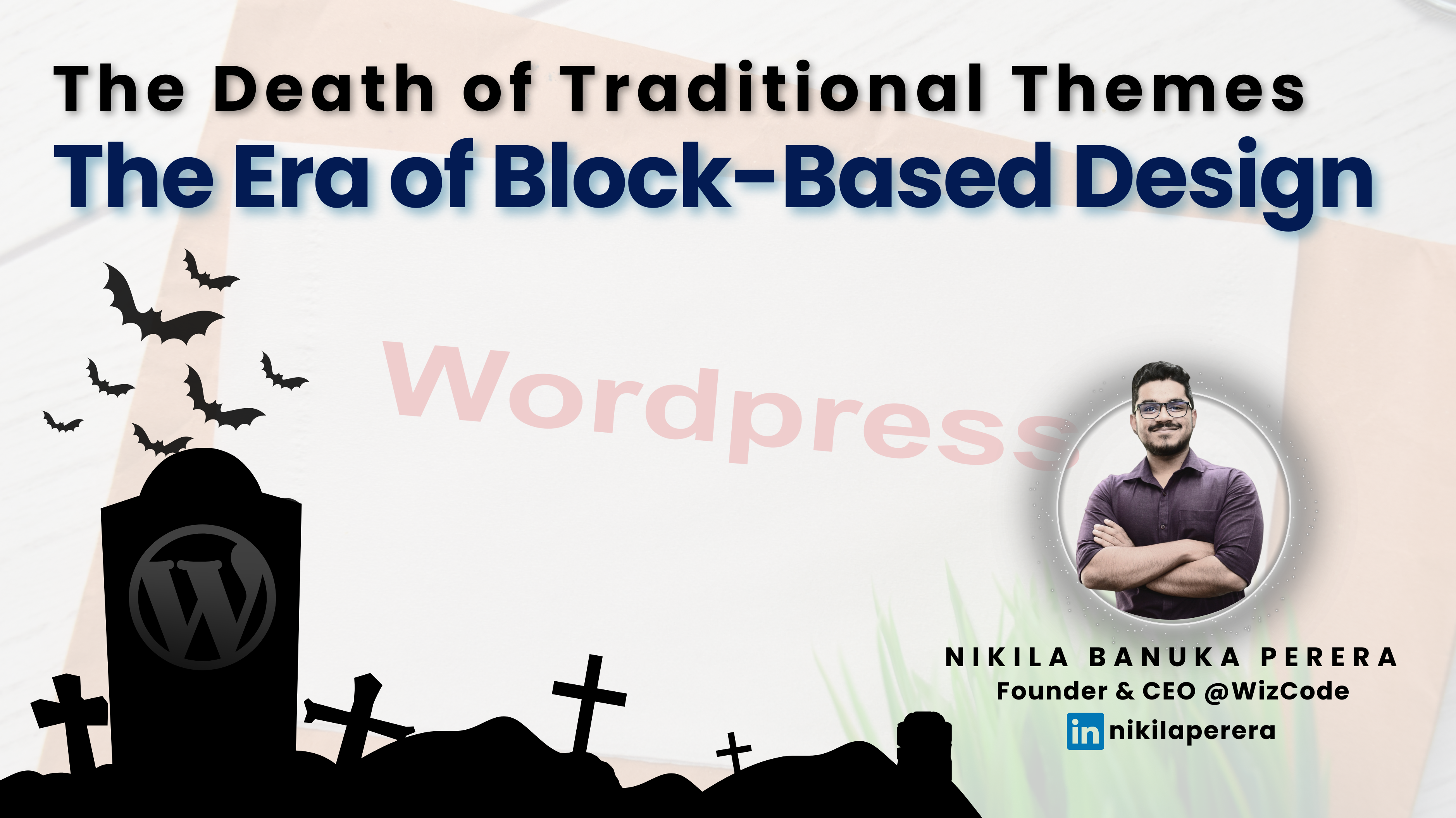
The Death of Traditional Themes: The Era of Block-Based Design
In the ever-evolving landscape of web development, 2025 marks a definitive shift in how websites are built and designed on WordPress. The age of traditional themes, once the cornerstone of WordPress customization, is waning, making way for a new paradigm: block-based design. This transformation is not merely a trend but a revolution, offering unparalleled flexibility, creativity, and efficiency for developers and users alike.
The Legacy of Traditional Themes
For over a decade, traditional themes have been integral to WordPress. Themes provided predefined layouts, styles, and functionalities, making it easier for users to launch websites without extensive coding knowledge. While these themes served their purpose admirably, they also introduced limitations.
Rigidity in Customization: Traditional themes often constrained users to fixed templates, requiring advanced coding to make significant modifications.
Dependence on Child Themes: Customizing a traditional theme without breaking updates necessitated child themes, adding layers of complexity.
Performance Challenges: Many traditional themes were bloated with unnecessary features, slowing down websites and affecting SEO performance.
Despite these drawbacks, traditional themes dominated because they simplified the process of getting a website up and running. But as user needs grew more sophisticated, the cracks in this approach began to show.
The Rise of Block-Based Design
Enter block-based design, a game-changer introduced with WordPress’s Gutenberg editor. Since its launch in 2018, Gutenberg has evolved from a simple content editor to a comprehensive site-building tool. The block-based design philosophy revolves around modularity—websites are constructed using blocks, each serving a specific function such as text, images, buttons, or forms. This shift has fundamentally altered how websites are conceptualized and built.
Key Advantages of Block-Based Design
Unmatched Flexibility: Block-based design empowers users to build layouts from scratch or modify existing ones with precision. Each block can be customized independently, allowing for unique, creative designs without relying on predefined templates.
Enhanced User Experience: The block editor offers a visual, drag-and-drop interface, making it accessible for non-technical users while still robust enough for developers.
Performance Optimization: By using only the blocks needed for a specific page or section, websites become leaner and faster, improving both user experience and search engine rankings.
Future-Proofing: Block-based design aligns with WordPress’s long-term vision, ensuring compatibility with future updates and innovations.
Full Site Editing: The Game-Changer
The introduction of Full Site Editing (FSE) in WordPress 5.9 has solidified the dominance of block-based design. FSE allows users to edit every aspect of a website—from headers and footers to archives and single posts—using blocks. This unified approach eliminates the need for traditional themes, as users can now create fully customized designs without relying on external templates.
How Block-Based Design Benefits Developers
For developers, block-based design is a boon. It streamlines workflows, reduces redundancy, and enables greater creative freedom. Developers can now:
Create reusable block patterns and templates.
Develop custom blocks tailored to specific client needs.
Focus on performance optimization rather than troubleshooting theme compatibility issues.
Challenges in the Transition
While the shift to block-based design is overwhelmingly positive, it does come with its own set of challenges:
Learning Curve: Users accustomed to traditional themes may find the block editor daunting initially.
Compatibility Issues: Older plugins and tools designed for traditional themes may not work seamlessly with block-based designs.
Content Migration: Transitioning existing websites to a block-based system can be time-consuming and requires careful planning.
The End of Traditional Themes
Does this mean traditional themes will disappear entirely? Not immediately. Many websites still rely on traditional themes, and the ecosystem around them remains robust. However, the writing is on the wall. As more users and developers adopt block-based design, the demand for traditional themes will dwindle. Eventually, they will become relics of a bygone era, much like static HTML websites in the wake of CMS platforms.
Embracing the Future
To thrive in this new era, WordPress users and developers must embrace change. Here’s how:
Adopt a Growth Mindset: View the transition as an opportunity to learn and innovate.
Leverage Resources: Utilize the wealth of tutorials, documentation, and community support available for block-based design.
Experiment Freely: Use staging environments to experiment with block-based layouts and features without impacting live websites.
Educate Clients: For developers, educating clients about the benefits of block-based design is crucial to ensuring smooth transitions.
Conclusion
The death of traditional themes and the rise of block-based design signify a monumental shift in WordPress’s evolution. This change is not just about aesthetics or functionality; it’s about redefining how websites are built and experienced. By embracing block-based design, WordPress users can unlock new levels of creativity, efficiency, and performance, paving the way for a more dynamic and adaptable web.
The future of WordPress is here, and it’s block by block.